Is this normal aging, or something more?
Facts last checked October 30, 2026, against official sources.
The short answer
- Forgetting a word or missing a payment once in a while is usually normal. Memory trouble that gets in the way of daily life is a reason to see a doctor.
- Forgetfulness can come with age, but dementia isn't a normal part of aging. Memory problems have many causes, and some can be treated.
- Confusion that starts suddenly, over hours or days, needs medical help right away. If it comes with other signs of stroke, call 911.
- Medicare covers a separate visit to review memory and make a care plan. An early answer also leaves time for legal and money decisions.
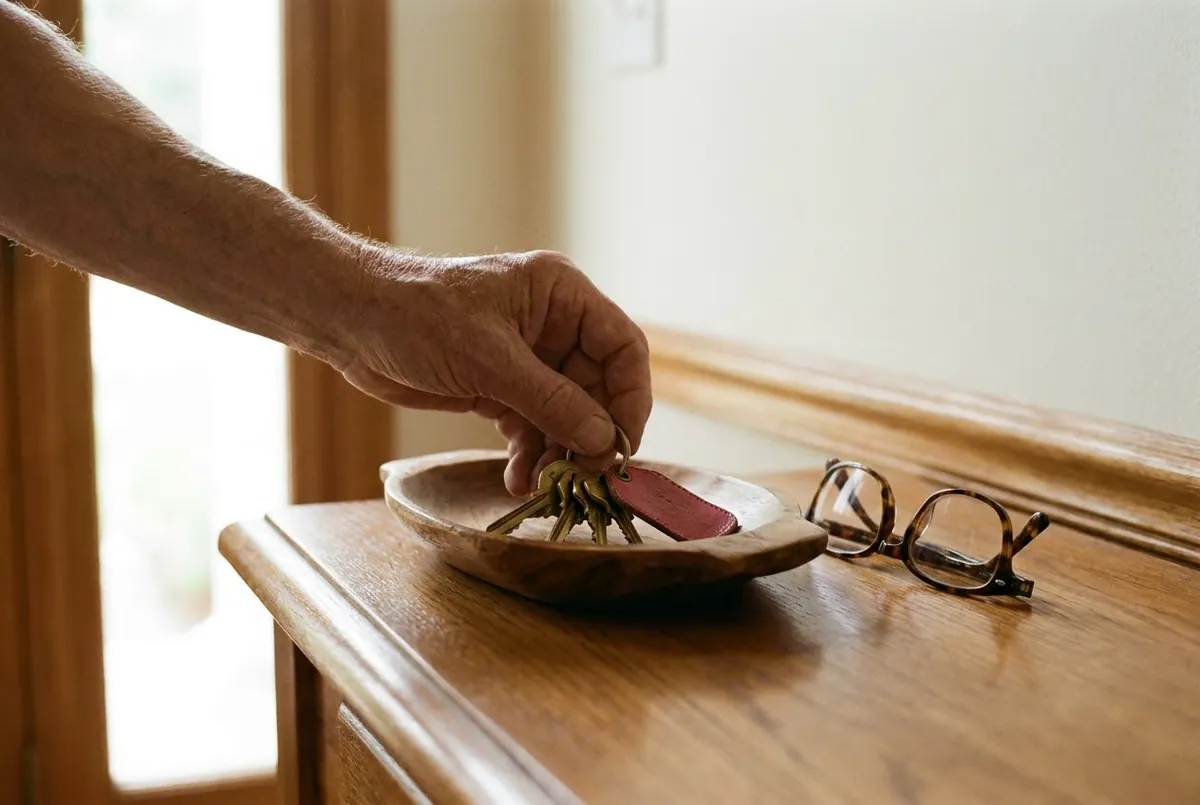
Most of us start keeping score without meaning to. The same story told twice at dinner. A bill left open on the counter. A name that wouldn’t come. It’s hard to know whether you’re watching a parent get older or watching something begin. Here’s what the National Institute on Aging says about telling the two apart, and what to do if you can’t.
What’s usually normal, and what isn’t
Many people find they don’t remember as well or as quickly as they get older. The line to watch is whether it stops them doing everyday things, such as driving, using the phone, and finding the way home.
This comparison comes from the National Institute on Aging:
| Normal aging | Signs of dementia |
|---|---|
| Making a bad decision once in a while | Making poor decisions a lot of the time |
| Missing a monthly payment | Problems taking care of monthly bills |
| Forgetting which day it is and remembering later | Losing track of the date or time of year |
| Sometimes forgetting which word to use | Trouble having a conversation |
| Losing things from time to time | Misplacing things often and being unable to find them |
Signs it’s time to talk to a doctor
- Asking the same questions over and over
- Getting lost in places they used to know well
- Having trouble following recipes or directions
- Becoming more confused about time, people and places
- Not taking care of themselves: eating poorly, not bathing, behaving unsafely
Memory isn’t the only thing to watch. Dementia can also affect language, attention and what a person sees, and some people’s personality changes. In early Alzheimer’s disease, families may notice poor judgment, trouble with money, losing the sense of initiative, or everyday tasks taking longer.
If it came on suddenly, don’t wait
Dementia develops slowly. Confusion that starts over hours or days is different, and it can look the same.
- It may be delirium. This is sudden confusion, which usually starts over a few hours or a few days and often comes and goes. Common causes include infections such as urinary tract infections and pneumonia, dehydration, medicines, and surgery or a hospital stay. It’s often temporary and treatable, so call their doctor right away or get urgent care the same day.
- It may be a stroke. Sudden confusion or trouble speaking is a warning sign. So are sudden weakness or numbness on one side, trouble seeing, trouble walking, or a severe headache. Call 911 right away.
If your parent lives far away, tell the people nearby what to watch for. Our one-page plan has room for who to call.
Other things that can cause memory problems
Not every memory problem is dementia. These can cause them too:
- Side effects of medicines
- Depression and anxiety
- Thyroid, kidney or liver problems
- Low levels of nutrients such as vitamin B12, or not eating enough
- Sleep problems
- Alcohol or drug misuse
- A head injury, even a concussion
- Blood clots, tumors or infections in the brain
Some of these may be treatable and possibly reversible, which is one of the best reasons to get checked.
Big life changes matter too. After retiring or losing a spouse, someone who feels sad, lonely or worried may become confused or forgetful. That usually improves as the stress fades. If it lasts more than a few weeks, talk to a doctor.
And check their hearing. Older people who can’t hear well are sometimes mistakenly thought to be confused. Our hearing guide covers what to do.
If your parent says they feel hopeless or you’re worried they may harm themselves, call or text 988 right away.
There’s a stage in between
Some older adults have mild cognitive impairment, or MCI. That means more memory or thinking problems than other people their age, while they can still take care of themselves and do their normal daily activities. They may lose things often, forget appointments, or have more trouble finding words.
MCI may be an early sign of Alzheimer’s disease, but not everyone with MCI develops it. There’s no standard treatment. A doctor can keep track of changes, and the advice is to go back every 6 to 12 months.
How to get them to a doctor
This is often the hardest part. A parent who’s scared may say they’re fine, and they may get angry if you press.
- Write down what you’ve seen. Keep it specific, with dates: “Got lost driving home from church on Tuesday.” Doctors may ask a family member or friend about daily activities and changes in behavior, so examples help.
- Don’t lead with the word dementia. Try “I’d feel better if we got it checked,” or “It might be a medicine.” Both are true.
- Offer the practical part. The National Institute on Aging suggests offering to make the appointment, give them a ride, or go along.
- Bring every medicine. Take all prescriptions, over-the-counter medicines and supplements in a bag.
- Ask to go in with them. Medicare says you can bring someone to help listen and answer questions.
What the doctor may do
Doctors may ask questions, test memory, problem solving, counting and language, order blood and urine tests, and order brain scans. They may check for depression. Your parent may be referred to a geriatrician, a neurologist or a memory clinic.
Ask these questions:
- What do you think is causing this?
- Could any of their medicines be part of it?
- What tests do you need, and what will they tell us?
- Is it safe for them to drive, cook and manage money?
- When should we come back?
What Medicare covers
| Visit | What it does | What you pay |
|---|---|---|
| Yearly Wellness visit | A prevention visit that includes a cognitive assessment to look for signs of dementia | Nothing, if the provider accepts assignment. Other costs may apply |
| Cognitive assessment and care plan visit | A separate, full review of memory and thinking, medicines and support, ending in a care plan | After the Part B deductible, 20% of the approved amount |
The Wellness visit is an easy way to start, but it isn’t a full exam. Medicare says that if you have specific concerns, you should schedule a separate appointment. If you’re worried now, book one and say why.
People with dementia and their unpaid caregivers may also get extra support through a Medicare pilot called GUIDE. Ask the doctor whether they take part.
If the answer is dementia
There’s no cure for Alzheimer’s disease, and we won’t pretend otherwise. Several medicines are approved, and most work best in the early or middle stages. Some may help with symptoms for a time, and two newer drugs slowed decline for some people in studies. Whether any of them fits your parent is a question for their doctor.
An early answer also gives a family time to plan, sort out money and legal matters, deal with safety, and look at where your parent may want to live.
Be careful with pills, supplements and brain games that promise to sharpen memory or prevent dementia. They may be unsafe, a waste of money, or both. Ask the doctor first.
The National Institute on Aging’s ADEAR Center answers questions and makes referrals at 800-438-4380. The Eldercare Locator at 800-677-1116 can find local help.
What to do either way
You don’t need a diagnosis to act on these. All of them are worth doing while your parent can take part.
- Legal papers. Financial documents must be made while a person has legal capacity. Read our guide to power of attorney, and do this first. Then find out where their papers are.
- Money. Trouble with bills can be an early sign, so put some protection in place. Set up the family safe word and print the Fridge Card.
- Safety at home. The self-check covers the stove, medicines and more.
- Driving. Plan before it becomes unsafe. Here’s how to think it through.
- Their own words. Use our 52 questions to get their stories down. It’s a good thing to do at any age.
What to do this week
- Write down three specific things you’ve noticed, with dates.
- If anything came on suddenly, call their doctor today.
- Book an appointment, and offer to take them.
- Put every medicine in a bag to bring along.
- Ask whether their power of attorney and health care proxy are in place.
Questions people ask
This is general information to help a family think things through. It isn't medical, legal, financial or insurance advice, and it can't judge your parent's situation. Read the disclaimer.
Where this comes from
Last checked October 30, 2026. Found something wrong? Tell us.
- Memory Problems, Forgetfulness, and Aging, National Institute on Aging, November 22, 2023
- What Is Mild Cognitive Impairment?, National Institute on Aging, April 12, 2021
- What Are the Signs of Alzheimer's Disease?, National Institute on Aging, October 18, 2022
- How Is Alzheimer's Disease Diagnosed?, National Institute on Aging, December 8, 2022
- How Is Alzheimer's Disease Treated?, National Institute on Aging, September 12, 2023
- Does an Older Adult in Your Life Need Help?, National Institute on Aging, October 12, 2023
- Hearing Loss: A Common Problem for Older Adults, National Institute on Aging, January 19, 2023
- Delirium, MedlinePlus, National Library of Medicine, October 18, 2023
- Stroke, MedlinePlus, National Library of Medicine, July 28, 2025
- Yearly "Wellness" visits, Medicare.gov
- Cognitive assessment & care plan services, Medicare.gov
- Planning After a Dementia Diagnosis, National Institute on Aging
- Eldercare Locator, Administration for Community Living