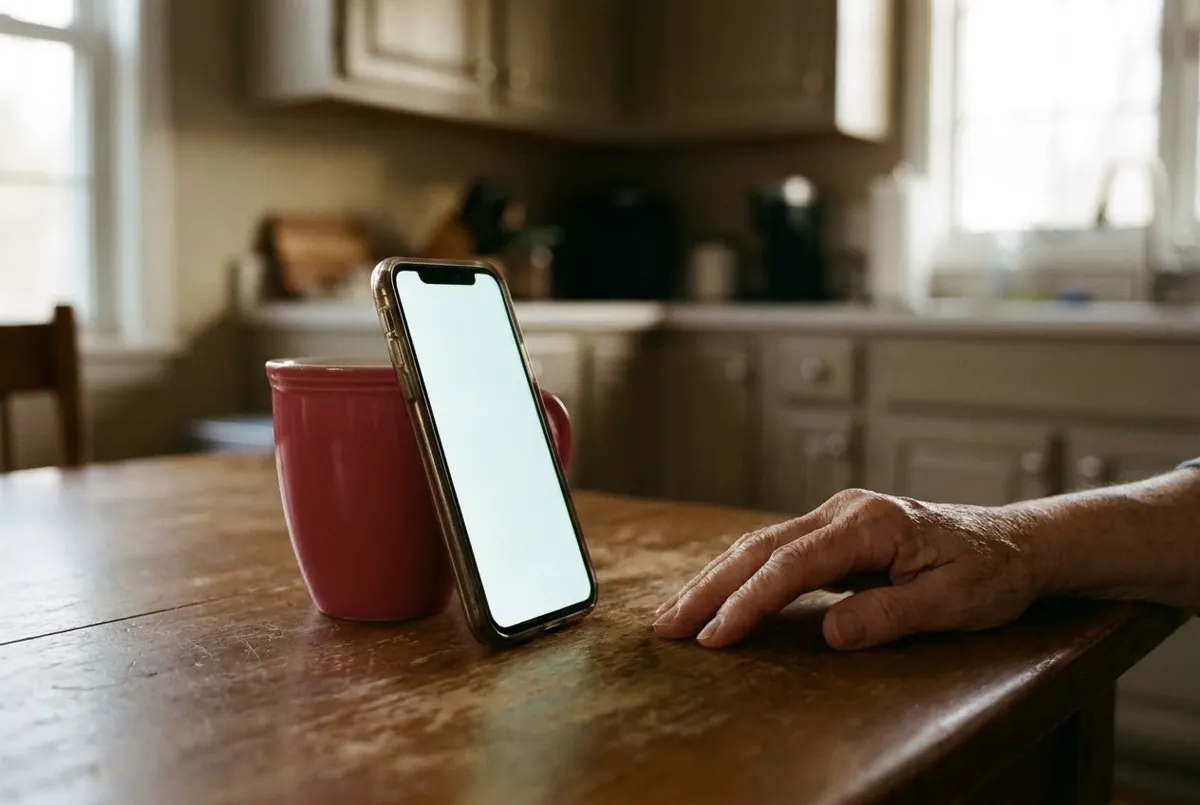
You live far away. Here's a week you can keep.
You can't just drop by, so it takes a plan. This one fits on a page: who calls and when, who's nearby, and what happens if nobody picks up.
Set it up with your parent, so it feels like staying close. If you live an hour or more away, the National Institute on Aging counts you as a long-distance caregiver.
Facts last checked October 31, 2026, against official sources.
If nobody answers
A missed call usually means nothing. Decide now what happens next, so nobody has to work it out in a panic.
- Try again, on every number you have.
- Call the person close by, and ask them to go over.
- If you can't reach anyone and you're worried, call the police or sheriff where your parent lives and ask for someone to check on them.
Calling 911 from where you are may not work. With few exceptions, 911 calls can't be transferred to another town or state. The National 911 Program says the best option is the 10-digit number for law enforcement in the community where help is needed. It's on the agency's website. Look it up today and put it on the plan.
A check-in isn't an emergency service. It only tells you something may be wrong, and it depends on people. Here's what their phone or watch can do.
Why the long call matters
It's the part of the plan that's for them. Loneliness and social isolation are linked with higher risks of heart disease, depression and cognitive decline. Someone can also sound fine for two minutes, so a longer talk tells you more, though it still can't show you everything. Some changes are easier to see in person.
If calls are getting harder, it may be their hearing. Our hearing guide covers what to do, and 52 questions will give you something better to talk about than the weather.
What you can do from far away
More than it feels like. The National Institute on Aging lists these:
To stay in the loop, keep a shared list of phone numbers and a shared calendar online. With your parent's permission, you can join telehealth visits, and the doctor can talk with you directly. Teaching them to text or video call helps too.
Make the visit count
Short visits fill up fast. Ask ahead what your parent would like to do, and ask whoever helps them what they need. Pick your top priorities and leave the rest for next time.
Look for jobs you can take home and do from a distance. Then leave time for something that has nothing to do with caregiving, like a movie, a game or a drive.
When it's more than you can do from here
Start with the Eldercare Locator, a free government service that can find local help: 800-677-1116.
A geriatric care manager is usually a licensed nurse or social worker who can visit, make a care plan and find local services. They can be especially helpful when family lives far away. They charge by the hour, and the first evaluation may be expensive. Medicare and Medicaid don't pay for this, and most private health insurance doesn't either, though long-term care insurance may cover some of it. Before you sign anything, get the fees in writing. We don't recommend or refer to any care manager.
Go easy on yourself
Caregivers who live far away may feel guilty about not being closer, not doing enough, or not having enough time. The National Institute on Aging calls that normal and understandable. A plan you can keep does more than a promise you can't.
What to do this week
- Ask your parent what kind of check-in would suit them.
- Find the police or sheriff's 10-digit number for their town.
- Ask a neighbor if you can swap numbers.
- Fill in the plan and send it to the family.
- Pick the day for the long call, and put it in your calendar.
Questions people ask
How often should I call my aging parent?There's no official number, so go by what they want. We suggest a short check-in most days and one longer call a week, and it's easy to change.
How do I get emergency help for a parent in another state?With few exceptions, 911 calls can't be transferred to another town or state. Dial the 10-digit number for law enforcement where your parent lives. You'll find it on the agency's website, so look it up before you need it.
Can I talk to my parent's doctor from far away?Yes, with your parent's permission. Ask the office how to give it. With permission, you can also join their telehealth visits.
What can I do for a parent from another state?Quite a lot. You can help with bills and insurance claims, arrange in-home care, order supplies, organize papers, and research care options. You can also support the person who does the day-to-day caregiving.
This is general information to help a family think things through. It isn't medical, legal, financial or insurance advice, and it can't judge your parent's situation. Read the disclaimer.
Where this comes from
Last checked October 31, 2026. Found something wrong? Tell us.
- Long-Distance Caregiving, National Institute on Aging
- What Is Long-Distance Caregiving?, National Institute on Aging, October 12, 2023
- Getting Started With Caregiving, National Institute on Aging, October 12, 2023
- FAQ About Calling 911, National 911 Program, March 8, 2023
- Services for Older Adults Living at Home, National Institute on Aging, October 12, 2023
- Caregiver Worksheets, National Institute on Aging, April 11, 2023
- Taking Care of Yourself: Tips for Caregivers, National Institute on Aging, October 12, 2023
- Loneliness and Social Isolation: Tips for Staying Connected, National Institute on Aging, July 11, 2024
- Talking with a Friend's or Family Member's Doctor During an Appointment, Medicare, April 2025
- Eldercare Locator, Administration for Community Living